
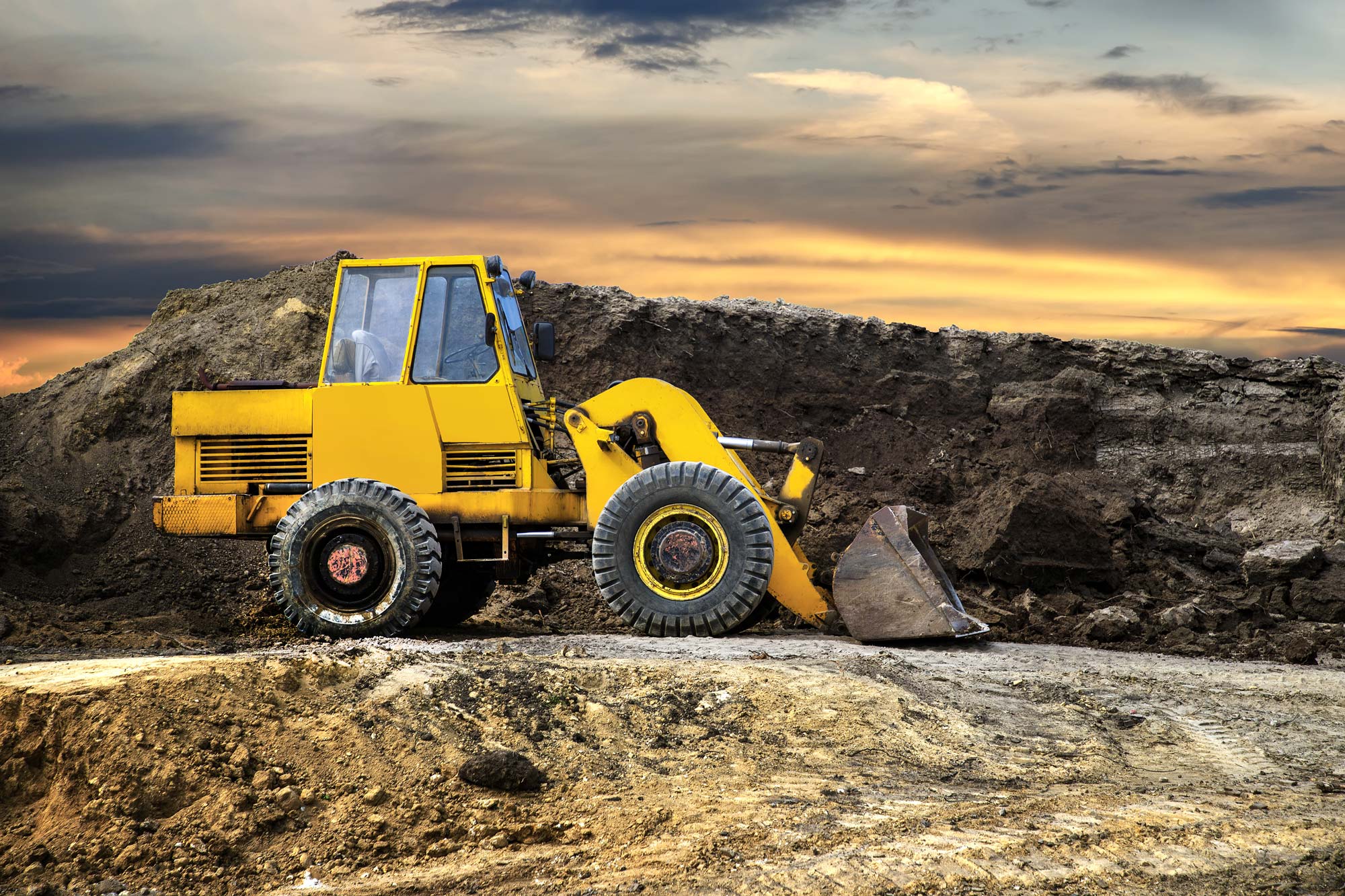
Every gallon of diesel you burn in a bulldozer that never touches a public road already had federal highway tax baked into the price. Most excavation companies pay it and never claim it back.
If you run an excavating or site work business anywhere in Frederick County or central Maryland, your bulldozers, excavators, compressors, and generators are almost certainly burning fuel that qualifies for a real federal tax credit most companies never bother to claim.
The federal fuel tax — about 18.3 cents per gallon on gasoline and 24.3 cents per gallon on undyed diesel — exists specifically to fund highway and road maintenance. When that fuel powers equipment that never operates on a public road, the tax was never really meant to apply, and the IRS allows you to claim it back through Form 4136, Credit for Federal Tax Paid on Fuels.
For excavation and site work specifically, this covers a long list of equipment most companies already own and run constantly: bulldozers, excavators, front loaders, cranes, air compressors, generators, and any other gas or diesel-powered equipment that does its work off the road, even if it occasionally gets trailered between job sites on a public highway to get there.
| Fuel Type | Federal Excise Tax Rate |
|---|---|
| Gasoline | $0.183 per gallon |
| Undyed diesel fuel | $0.243 per gallon |
This credit only applies to undyed, tax-paid diesel — the same diesel you'd put in a highway vehicle. Dyed diesel, sometimes called red diesel, is generally sold without the federal tax already built into the price, specifically because it's intended for off-road use from the start. If your equipment runs on dyed diesel, there's no tax to recover because you never paid it in the first place. The credit exists for situations where you bought regular, taxed diesel and then used it in equipment that didn't need to be taxed.
A site work company switching between on-road trucks and off-road equipment often buys both dyed and undyed diesel depending on what's being fueled. Only the undyed fuel actually used off-road generates a credit — fuel records need to distinguish clearly between the two.
The IRS doesn't take your word for the claim. You need a list of the specific vehicles and equipment used, proof of ownership, and fuel purchase invoices or receipts showing the type and amount of fuel bought. For 2024 and later returns, a new required worksheet — the Statement Supporting Fuel Tax Credit Computation — has to accompany the form, or the IRS will suspend the entire claim and request the missing documentation, creating a real delay.
Round gallons and dollar amounts to the nearest whole number rather than estimating loosely — even small rounding or math errors can cause a return to get flagged and slow down processing.
The math itself is simple: multiply the gallons of qualifying fuel used off-road by the applicable per-gallon rate. A site work company using 3,000 gallons of undyed diesel across its excavators and generators in a year would calculate a credit of roughly $729 from that fuel alone — and for a company running multiple pieces of heavy equipment across a full year, the total can run into the thousands.
Most companies claim this annually on Form 4136, filed along with their regular income tax return. If you'd rather not wait until year-end, periodic refunds are available through Form 8849, or if your company already files Form 720 for quarterly federal excise tax purposes, the credit can be applied directly against that liability instead.
The IRS has flagged abusive fuel tax credit schemes on its annual list of tax scams, and frivolous or inflated claims carry a real $5,000 civil penalty per return. This credit is genuine and valuable when your equipment and fuel records actually support it — but it's not a shortcut, and claims disproportionate to your reported business activity invite real scrutiny.
At Mercer Flanagan, we work with excavating and site work companies throughout Frederick County and central Maryland to set up fuel usage tracking that genuinely supports a fuel tax credit claim, and to make sure the claim is sized to match real, documented equipment use.
Book a free consultation and we'll walk through your specific situation — no pressure, no obligation.
Book a Free ConsultationNo. Dyed diesel is typically sold without the federal excise tax already included, since it's intended for off-road use. The credit only applies to undyed, tax-paid fuel that was used off-road after the tax was already paid.
A list of the specific equipment used, proof of ownership, and fuel purchase records showing type, quantity, and date. Starting with 2024 returns, a required worksheet also has to be filed alongside Form 4136.
Yes. Periodic refunds are available through Form 8849, or the credit can be applied against quarterly excise tax liability if your company already files Form 720.
By Roy Cogliandolo, CPA · Mercer Flanagan · June 9, 2026
This article is for general informational purposes and reflects tax rules current as of 2026. Fuel tax credit rates and documentation requirements are subject to change — confirm current figures with your CPA before relying on this information.